In this strange unsatisfying ramble Seth, who corners us like an under-utilised room attendant in a minor stately home, spins us the interminable, winding non-story of the The Great Northern Brotherhood of Canadian Cartoonists.
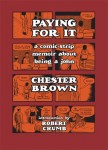
Paying For It is both autobiography and polemic. It’s autobiographical because it’s a blow by blow (no pun intended) recounting of a period in Chester Brown’s life when, after breaking up with his girlfriend, he starts to visit prostitutes. It’s also a polemic, defending his right to behave in this way, and an argument that prostitution should be decriminalised.
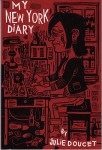
It’s easy to not notice just how superb an artist Doucet is. The autobiographical confessional form, pretty common these days, has appealed to a lot of limited artists – often to good effect, nonetheless – as well as some all-time comics greats, most obviously Robert Crumb. Doucet’s rather cramped drawings with figures with huge heads can look simple or even awkward, until you pay some attention.
Berlin is a comic set in… Berlin. It is set in the early years of the 20th century, with this particular issue occurring in that awkward period between the onset of the Great Depression and the Nazis’ assumption of power. So we are in the last days of Weimar Germany.
Graphic novels which attempt ambitious work in a self-consciously “literary” manner are still unusual enough that the appearance of a new one, however successfully it achieves its aims, is always cause for comment. James Sturm has been one of the quieter art-comics auteurs for a while now, steadily mining a seam of historical-realist narratives that rely on no flashy formal play or outrageous social commentary; his stories, like his artwork, are direct, to-the-point, and superbly crafted.