This interview, from 27th January 1997, is the first of two with Ted Rall, political and editorial cartoonist, journalist and broadcaster, whose work had been collected in eight books to that date. He talked with Ken Gale about his early career and influences, the pessimistic future of political cartooning in the USA, and the collective underside of the American psyche, gleefully explored in his book, Real Americans Admit: The Worst Thing I’ve Ever Done!

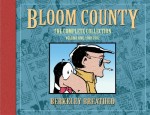
The Library of American Comics has finally given Bloom County fans what they have been requesting for years – a complete Bloom County collection assembling every daily and Sunday strip.
Before Krazy Kat there was The Dingbat Family. It was, in fact, the comic strip that gave birth to Krazy, who literally emerged from the margins of the strip to occupy his/her own series. Thanks to Fantagraphics, the Krazy Kat strips are readily available, but its progenitor is only very occasionally reprinted. That makes the appearance of this collection very welcome.
I’ve never been as big a fan of McCay as most comic fans are. I do see their point, and his massive importance is completely obvious, but I find most of his work a slog to read.
There is arguably no comic work as canonical as Krazy Kat. But unlike other revered classic newspaper strips, it was never terribly popular; indeed, a lot of the public disliked it. It’s also far harder to see Krazy Kat‘s impact on the medium. One could argue that it is the least influential canonical work in comics, and perhaps that is even true for all artforms.
An epic title to match its importance, and mirroring the lavish nature of this big volume. It was the first major adventure strip, and hugely influential on that strand of newspaper comics and beyond.
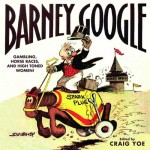
Barney Google was the great picaresque comic strip of the 1920s and 30s. Billy DeBeck’s artwork, more notable for its energy more than for its draftsmanship, was unique on the comics page, a scribbly, gestural line supported by shrewd shading and opulent backgrounds that were more suggested than drawn.
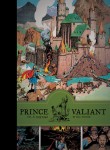
If imitation is the sincerest form of flattery, Hal Foster must be the most highly-flattered American cartoonist of the twentieth century. A generation of newspaper strip cartoonists, two generations of magazine and children’s-book illustrators, and (what are we up to now?) five generations of comic-book artists owe not only their style but an entire method of processing black-and-white images — high contrast, richly detailed, figure-oriented — to Foster.
2010 marks the tenth anniversary of Charles Schulz’s death, so it seems like a good time to revisit David Michaelis’ long biography of the cartoonist, now that some of the controversy that surrounded the book’s publication in 2007 has died away a little.